Food waste is one of the biggest challenges facing the global food industry today. Millions of tons of edible food are lost every year due to spoilage, improper storage, inefficient processing, and poor supply chain management. Beyond the economic loss, food waste also contributes significantly to environmental degradation through greenhouse gas emissions, excessive water use, and wasted agricultural resources. Fortunately, modern food technologies are offering innovative solutions to tackle this growing problem.
High Pressure Processing (HPP): Extending Shelf Life Naturally
One of the most effective technologies in food preservation is High Pressure Processing (HPP). Unlike traditional heat-based preservation methods, HPP uses extremely high water pressure to eliminate harmful microorganisms while preserving the food’s natural taste, texture, and nutritional value. This technology significantly extends shelf life without the need for excessive preservatives. Fresh juices, ready-to-eat meals, meat products, and dairy items processed through HPP remain safe and fresh for longer periods, reducing spoilage during transportation and storage. By maintaining product quality and freshness, food businesses can minimize product returns, wastage, and inventory losses.
3D Food Printing: Precision and Ingredient Optimization
Another emerging innovation transforming food sustainability is 3D food printing. This technology allows precise use of ingredients by producing customized food portions according to exact requirements. Since the process uses only the necessary quantity of raw materials, ingredient waste is drastically reduced. 3D printing also enables the utilization of unconventional or surplus food ingredients that may otherwise be discarded. For example, imperfect fruits, vegetable purees, or protein-rich food residues can be converted into nutritious and visually appealing products. In institutional catering, hospitals, and restaurants, 3D printing helps create portion-controlled meals, reducing plate waste and improving resource efficiency.
Smart Packaging: Intelligent Monitoring for Freshness
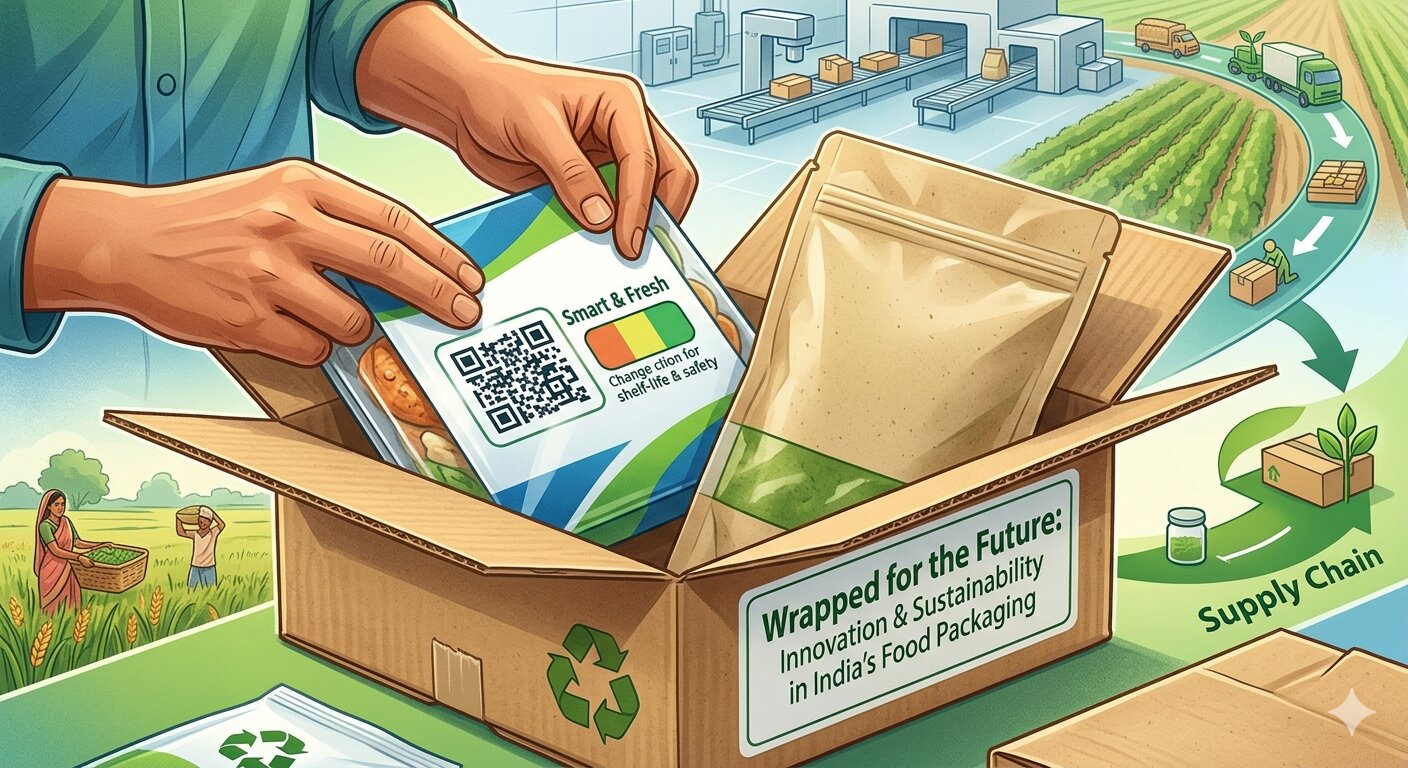
Packaging technology has evolved beyond simple containment and protection. Smart packaging now plays a critical role in reducing food spoilage and improving supply chain efficiency. Advanced smart packaging systems use sensors, indicators, and QR-based tracking technologies to monitor temperature, humidity, freshness, and microbial activity. These intelligent systems help retailers and consumers identify the actual condition of food products rather than relying solely on conservative expiry dates. For instance, freshness indicators can change color when a product begins to spoil, allowing timely consumption and reducing unnecessary disposal of still-edible food. Similarly, temperature-monitoring labels ensure that perishable products remain within safe storage conditions throughout transportation and retail distribution.
Improving Sustainability Across the Food Chain
The integration of HPP, 3D printing, and smart packaging creates a more sustainable and efficient food ecosystem. These technologies collectively help in:
• Extending product shelf life
• Reducing spoilage during storage and transport
• Optimizing ingredient utilization
• Enhancing food quality and safety
• Lowering environmental impact
• Improving supply chain efficiency
Food manufacturers, retailers, and consumers all benefit from reduced waste and better resource management. Moreover, these innovations support global sustainability goals by promoting responsible production and consumption practices.
Conclusion
As the global population continues to grow, reducing food waste has become essential for ensuring food security and environmental sustainability. Innovative technologies such as High Pressure Processing, 3D food printing, and smart packaging are reshaping the future of the food industry by minimizing spoilage, preserving quality, and optimizing ingredient use. By embracing these advancements, the food sector can move toward a smarter, greener, and more sustainable future.
Dr. Surender S Ghonkrokta
Dr. Surender S Ghonkrokta