Wrapped for the Future: How Innovation and Sustainability Are Transforming India’s Food Packaging Industry
Dr. Surender S Ghonkrokta
India’s processed food industry is witnessing a profound transformation. Rapid urbanisation, evolving lifestyles, expanding e-commerce networks, and increasing demand for ready-to-eat and packaged foods are reshaping consumption patterns across both urban and semi-urban markets. At the centre of this transition stands the food packaging industry. Packaging today is no longer limited to preserving products; it has emerged as a critical driver of branding, food safety, convenience, supply-chain efficiency, and environmental sustainability. As India positions itself as a global food-processing powerhouse, innovation and sustainability in packaging will become essential engines of growth.
Expanding Processed Food Market
India is among the world’s leading producers of fruits, vegetables, milk, cereals, and spices. Despite this strong agricultural base, the country’s food processing levels remain comparatively low when measured against developed economies. However, rising disposable incomes, the growth of dual-income households, changing dietary habits, and increasing health awareness are accelerating demand for packaged and processed foods.
Today’s consumers are increasingly seeking:
• Convenience and extended shelf life
• Hygienic and safe packaging
• Clear and visually appealing labelling
• Eco-friendly packaging solutions
• Portable and resealable packaging formats
This shift in consumer preferences has transformed packaging from a supporting function into a strategic growth driver for the entire food value chain.
Packaging Beyond Preservation
Modern food packaging performs a wide range of interconnected functions. It helps:
• Preserve freshness, taste, and nutritional value
• Prevent contamination and spoilage
• Improve transportation and logistics efficiency
• Provide product information and traceability
• Enhance brand visibility and consumer appeal
• Reduce food wastage across the supply chain
Advancements in packaging materials and technologies are enabling companies to improve product quality while simultaneously reducing operational costs and environmental impact.
Innovations Reshaping the Industry
Smart Packaging Technologies
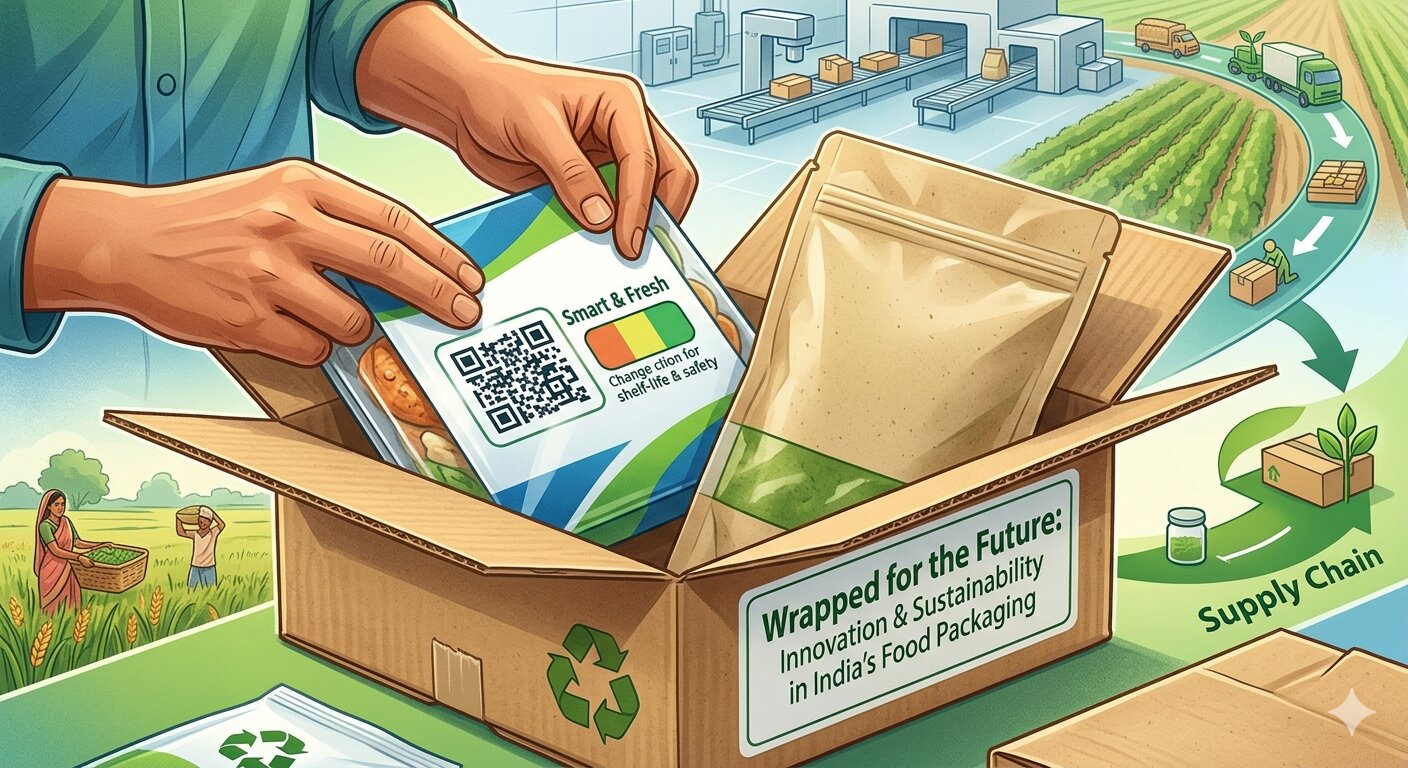
Technology-driven packaging solutions are increasingly redefining the sector. Innovations such as QR-code-enabled traceability, freshness indicators, temperature-sensitive labels, anti-counterfeit features, and RFID-based inventory systems are improving transparency and efficiency across supply chains.
These technologies not only strengthen consumer confidence but are also becoming especially important for premium products and export-oriented food businesses.
Flexible and Lightweight Packaging
Flexible packaging formats such as stand-up pouches, vacuum-sealed packs, zipper packs, and single-serve sachets are rapidly gaining popularity in segments like snacks, dairy, beverages, and ready-to-eat foods.
Lightweight packaging reduces material consumption, lowers transportation costs, and decreases carbon emissions, making it both economically and environmentally advantageous.
Sustainable and Biodegradable Materials
Environmental concerns and regulatory pressures are accelerating the shift towards sustainable packaging alternatives. Companies are increasingly investing in:
• Biodegradable plastics
• Compostable films and materials
• Plant-based polymers
• Recyclable paperboard packaging
• Edible packaging innovations
Sustainability is no longer merely a branding strategy; it has become a business imperative driven by consumers, regulators, and global environmental commitments.
Active Packaging Solutions
Active packaging technologies such as oxygen absorbers, moisture regulators, and antimicrobial films are helping extend shelf life and maintain product quality. These solutions are particularly valuable in India, where cold-chain infrastructure and logistics systems continue to face challenges.
By reducing spoilage and wastage, active packaging can significantly improve efficiency across the food supply chain.
Sustainability as the Defining Growth Driver
India generates substantial plastic packaging waste, creating mounting environmental and regulatory challenges. Consequently, sustainability is emerging as the defining factor shaping the future of the packaging industry.
Key trends influencing the sector include:
• Restrictions on single-use plastics
• Circular economy and recycling initiatives
• Minimalist and eco-friendly packaging design
• Increased use of renewable raw materials
• Expansion of recycling and recovery systems
Government policies such as Extended Producer Responsibility (EPR) regulations and revised plastic waste management rules are accelerating the industry’s transition toward greener packaging models.
Emerging Opportunities for India
India possesses significant potential to become a global hub for sustainable food packaging due to several structural advantages:
• A vast agricultural base and growing food-processing sector
• Rising technological adoption and innovation capabilities
• A dynamic startup ecosystem
• Increasing export opportunities
• Expanding demand for packaged foods in rural markets
• Rapid growth of e-commerce and quick-commerce platforms
The rise of online food delivery and digital retail channels is creating strong demand for durable, lightweight, and delivery-friendly packaging solutions.
Challenges Before the Industry
Despite strong growth prospects, several challenges continue to hinder the sector’s progress:
• Higher costs associated with sustainable packaging materials
• Inadequate recycling and waste-management infrastructure
• Uneven consumer awareness across regions
• Regulatory complexities and compliance costs
• Dependence on imported technologies
• Affordability constraints faced by small and medium enterprises
Addressing these issues will require coordinated efforts from industry stakeholders, policymakers, research institutions, and startups.
The Road Ahead
The future of India’s processed food industry will depend significantly on how effectively the packaging sector balances innovation, affordability, and sustainability. Businesses that invest in eco-friendly materials, intelligent packaging systems, and consumer-focused designs will gain a long-term competitive advantage.
Packaging today is not merely about protecting products. It is about ensuring food safety, reducing waste, enhancing consumer experience, strengthening supply chains, and supporting environmental sustainability.
As India modernises its food economy, the food packaging industry will play a decisive role in shaping the next phase of processed food growth. Innovation and sustainability are no longer separate objectives — together they form the foundation of India’s future food-processing revolution.